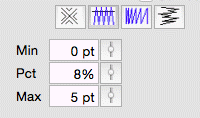
 Compensation helps create
embroidery that matches the image, understanding that the process of sewing the
design will create distortion as it is happening. With compensation, the
endpoints of the lines in a fill are stretched out slightly past the edge of the
shape. This helps with registration issues because as the lines are sewn, the
fabric is pulled in slightly (shortened), so the longer lines will reach the
spot intended to be covered.
Compensation helps create
embroidery that matches the image, understanding that the process of sewing the
design will create distortion as it is happening. With compensation, the
endpoints of the lines in a fill are stretched out slightly past the edge of the
shape. This helps with registration issues because as the lines are sewn, the
fabric is pulled in slightly (shortened), so the longer lines will reach the
spot intended to be covered.
You can use a minimum value, usually 0 – 3 points, depending on what the fill is lined up against. If your fill has a wide difference in the width of the runs, in other words some narrow parts and some fatter parts, you may want to use a percent for the compensation. We suggest keeping it a small value, 2-3%. It will be kept in check by the Max value though, even if you use a high percentage.
While the compensation numbers sound like something you should use, they’re really there more for the professional who uses them all the time. Most of the time, simply adjusting the shape to overlap anything that neighbors it will do a fine job of handling registration issues.